Stalking Support
Stalking is a pattern of repeated, unwanted behaviour that can cause you to feel distressed or scared. Support for victims of stalking in County Durham and Darlington is available free and confidential.

What Is Stalking?
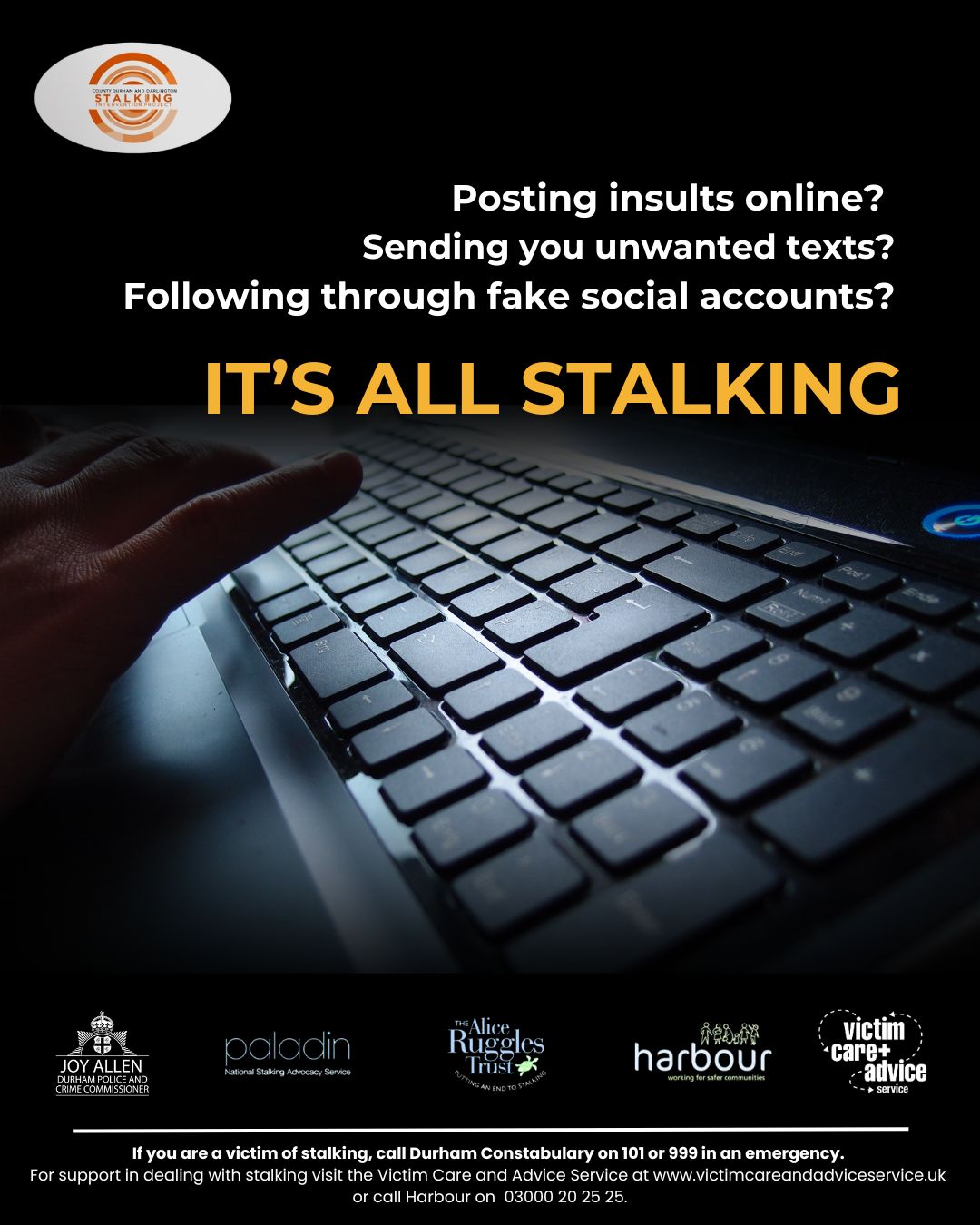
Stalking is a pattern of repeated, unwanted behaviour that causes you to feel distressed or scared. It can be perpetrated by men or women.
Stalking can happen with or without a fear of violence. This means that if you are receiving persistent unwanted contact that is causing you distress but the person has never threatened you this is still stalking and is not acceptable.
You do not need to have reported it to the police to access our support.
Durham Stalking Service
Across County Durham and Darlington local support for victims of stalking is provided by two services, both services have dedicated Independent Stalking Advocacy Caseworkers (ISAC). An ISAC is a trained specialist who provides support to individuals who are victims of criminal conduct involving acts associated with stalking.
Victim Care and Advice Service supports victims of non-domestic stalking crimes; support is available to victims living within County Durham and Darlington.
An Independent Stalking Advocate (ISAC) provides victims of stalking with specialist independent support, advice, and advocacy. The ISAC provides victims with a single point of contact, assess the risk and needs of the victim alongside addressing any support needs. Victims are provided with all the options available to them and what their rights are throughout the Criminal Justice process.
It is very important that the victim is given practical options such as, information about personal safety where this is required. The ISAC will complete a victim safety plan, that explores different areas of their lives, enabling the victim to feel more empowered and confident in safeguarding themselves. The ISAC will also be able to liaise with other agencies on behalf of the victim, if this is something that is required.
Our team are responsible for supporting people that have experienced or been affected by crime to help them cope with the immediate impact of the crime and assist them in their subsequent recovery. To achieve this, they will help victims to identify their coping and recovery needs and subsequently develop a jointly owned recovery plan that is suitable to the victims’ personal situation.
They will provide this support for the victim whether the incident has been reported to the police or not.
Support For Victims
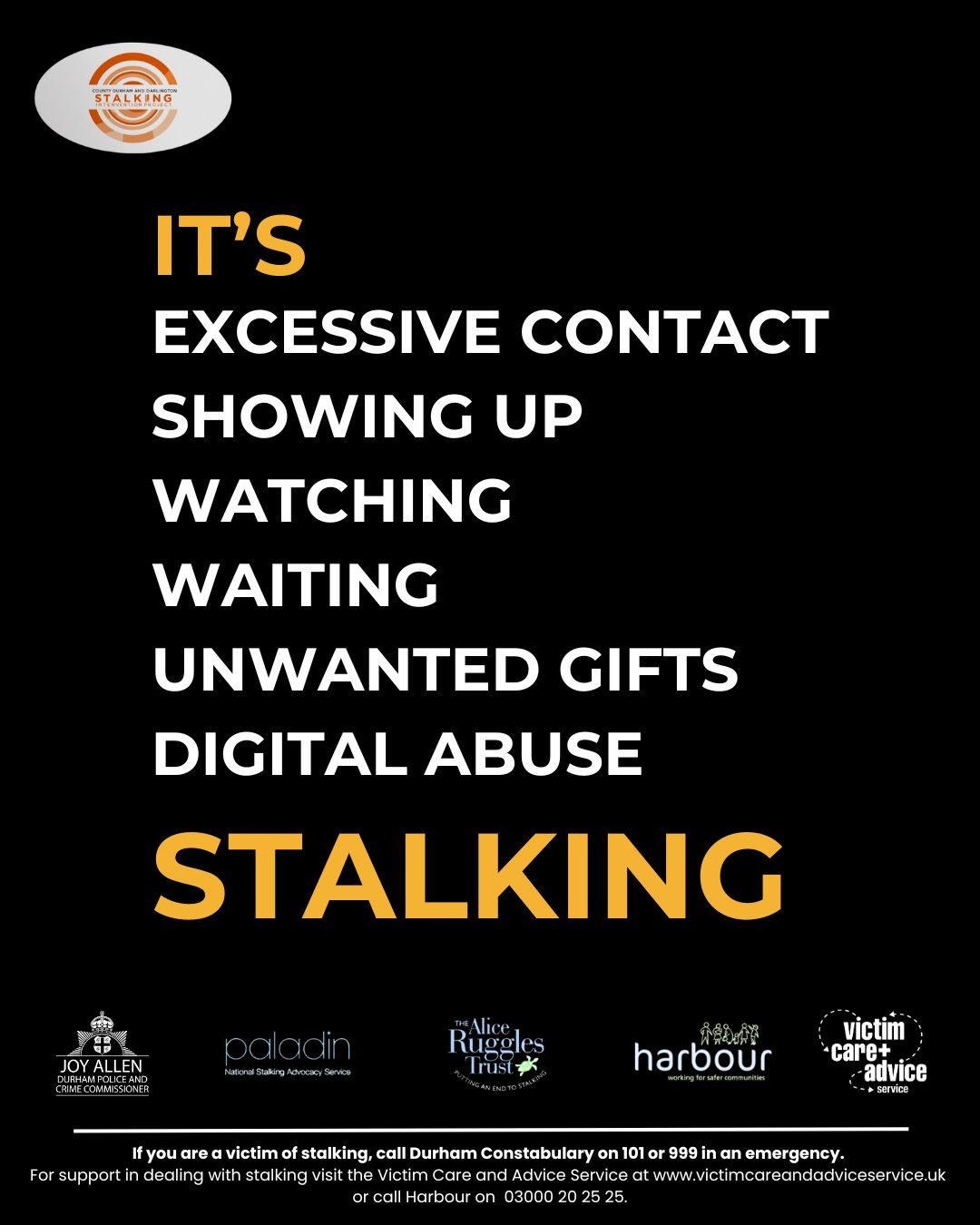
Please see below information and contact details for organisations that support victims of Stalking.
Harbour
Harbour works with families and individuals who are affected by abuse from a partner, former partner or other family member.
Protection Against Stalking
A national charity raising awareness of stalking and harassment and supporting victims and their families.
Suzy Lamplugh Trust
The Suzy Lamplugh Trust is a charity that provides training, advice and campaigns for personal safety and stalking awareness. It runs the National Stalking Helpline and supports victims of stalking.
National Stalking Helpline
Offers practical help for anyone who has been affected by stalking or harassment and has an online tool that can help you identify whether you're being stalked.
Revenge Porn Helpline
Advice, guidance and support for adults (over 18).
Alice Ruggles Trust
Raises awareness of coercive control and stalking to help victims seek help sooner.
The Cyber Helpline
Free expert help for victims of cybercrime and online harm.
Paladin Service
Provides trained Independent Stalking Advocacy Caseworkers (ISACs) who can offer specialist support and advice to victims of stalking. They will help work with the victim and the police throughout an investigation, and give support to the victim during the court process. Victims can get support from an ISAC even if they haven’t reported to the police yet.
Paladin also has ISACs who work with young people (aged 16 and above) who have been victims of stalking.
Is It An Emergency?
- Is someone in immediate danger?
- Is a crime taking place or has one just happened?
If so, call 999 now and ask for the police.
If you have a hearing or speech impairment, use our textphone service 18000 or text us on 999 if you’ve pre-registered with the emergencySMS service.
If you're a British Sign Language (BSL) user, you can call 999 BSL to use a remote BSL interpreter.
If you're in danger but you can't talk on the phone, you should still call 999 and follow these instructions - How to make a silent 999 call | Durham Constabulary
If it is not an emergency call 101 or report online - Report a crime | Durham Constabulary
FAQs
Please browse our FAQs below, and get in touch if you have any further questions.
We promise that all information you provide to us ‐ verbally or in writing ‐ will be kept confidential within the Victim Care and Advice Service.
This information will not be shared externally unless you expressly instruct us to do so or unless we are required to under law. We will take our time to establish the best way to communicate with you; for example, which email address, phone number or other contact method you want us to use.
We will take any other steps that you need us to take to protect your privacy.
The Victim Care and Advice Service is not a counselling service however following our needs assessment with you, if counselling is required then we can arrange for you to be referred to a counselling service.
There is no cost, the service is free and confidential
You are not legally bound to report your crime to the police however, investigating crimes, catching criminals and protecting the community is the police’s main job, but they also help victims and witnesses of crime.
Even if you do not report a crime as the victim, someone who saw what happened might do, so it’s likely that you will have to talk to police after a crime.
Want To Know More?
Get in touch with our team to find out how we can help you.